
Early Relational Health Together
Relationships babies and toddlers have with the people who love and care for them shape everything — including the wellbeing of the caregivers themselves.
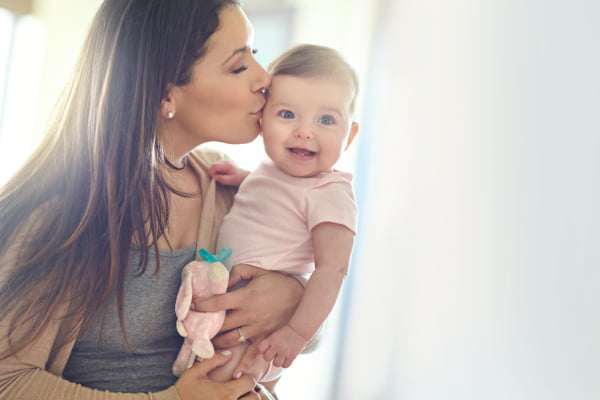
“When providers and families work together as partners, children don’t just receive better care — they grow up knowing they are loved, understood, and safe.”
About the Series: What Is Early Relational Health Together?
Early Relational Health Together is a free, bilingual learning series built for both families and the providers who support them because when we understand early relational health together, we can do more together.
Whether you’re a parent, grandparent, home visitor, pediatric provider, childcare professional, or early childhood specialist this series is designed for you. It brings research and lived experience side by side, honoring cultural wisdom alongside the science of early childhood development.

Why Relationships Matter for Everyone: Early Relational Health Supports Caregivers Too
We know that close, nurturing relationships are foundational for babies and toddlers, but the research is equally clear that these relationships matter for the adults too. When caregivers feel seen, supported, and in true partnership with providers, their own stress decreases, their confidence grows, and their capacity to show up for their children deepens.
Providers also benefit: when they experience genuine relational alliance with families built on trust, curiosity, and shared purpose, they report greater satisfaction, less burnout, and more meaningful work. Early relational health isn’t just a framework for children. It’s a framework for all of us.
This series invites everyone into that circle of care by recognizing that thriving families and thriving providers go hand in hand.
The Curriculum: Three Core Modules
Each module is available in English and Spanish and includes an animated video alongside guided learning materials. An Introduction Video sets the stage for the full series.
Module 1: What Is Early Relational Health?
Get grounded in the science and heart of early relational health and why the earliest relationships in a child’s life shape development, wellbeing, and resilience in profound ways.
Module 2: What Are the Core Values of Early Relational Health?
Explore the values that guide a relational approach to supporting babies, toddlers, and families including cultural humility, curiosity, and the importance of diverse ways of knowing.
Module 3: We’re on the Same Team
Building Partnerships Between Providers and Parents: A Relational Alliance. Discover what genuine partnership looks like and how collaborative, power-sharing relationships between families and providers lead to better outcomes for everyone.
How Each Module Works: Know · See · Reflect · Take Action
Every module guides you through four thoughtfully designed steps and moves from new ideas all the way to real change in your everyday interactions.
Know
Each module opens with new ideas and research to think about: accessible, meaningful content grounded in the science of early childhood development and the wisdom of families.
See
Animated videos bring the ideas to life showing what early relational health looks like in real moments between caregivers and young children, and between families and providers.
Reflect
Thoughtful questions invite you to pause and wonder and connect the learning to your own experiences, relationships, and roles. Separate reflection prompts are offered for parents and for providers.
Take Action
Practical steps you can put into practice right away from sharing the series with your network, to setting up informal conversations with families, to reflecting on who belongs on your team.
Flexible by Design: Flexible by Design - Use It Your Way
The animated videos and module materials are designed to be used flexibly on your own, with families, or in professional settings. There’s no single right way to engage with this series.
Self-Paced Learning
Go through the modules independently at your own pace which is ideal for families exploring early relational health on their own time.
Home Visits
Use the animated videos as conversation starters during home visits with families to spark reflection and dialogue in a natural, low-pressure setting.
Workshops & Trainings
Integrate the Know–See–Reflect–Action framework into professional development sessions or community workshops. The modules are modular so use one or all three.
Clinical & Office Settings
Screen an animated video in a waiting room or share a module link at a well-child visit. Short, visual, and culturally responsive.
Parent Groups
Facilitate a group discussion using the Reflect questions which are available in both English and Spanish, with separate prompts for parents and providers.
Team Meetings
Bring the series into staff meetings or interdisciplinary team settings to build shared language around early relational health practices.
Designed for Everyone: Who Is This Series For?
Families
Think of your child’s providers as partners on your team. This series helps you understand what early relational health looks like in everyday moments and gives you language and confidence to build the kinds of trusting relationships that help your child thrive. Your instincts, your culture, and your knowledge of your child are essential.
Providers
Think of the whole family as your client. This series deepens your understanding of relational health and strengthens your partnerships with families. It supports a strength-based, collaborative approach by recognizing that your own wellbeing in the work matters too, and that the alliances you build with families are at the heart of everything.
Access the Materials: Download the Series
We’d love to know who’s using these materials so we can keep improving them. Your information will never be shared, so just fill out this short form to get instant access.
You will have the choice of downloading the video modules and/or presentations (PDF and PowerPoint) in either English or Spanish.
Acknowledgements
This project was made possible through a partnership of the Michigan Department of Health and Human Services (MDHHS), Bureau of Children’s Coordinated Health Policy and Supports, Division of Program and Grant Development and Quality Monitoring, and the Michigan Health Endowment Fund.
A special thank you to Parent leaders, Bryn Fortune, Mia Halton, Steven Thibert, and Regine Cherry of Nurture Connections Family Network Collaborative (FNC), Infant and Early Childhood Mental Consultant, Mary Mackrain of MDHHS, and our Nurture Connection partners David Willis and Patsy Hampton, as well as Hoda Shawky, Patsy Hampton, Cailin O'Connor, Jenna Russo, and Annika List through the support of the Center for the Study of Social Policy for their leadership in creating this video series.
We are thankful for the direction and deep expertise of our Next Day Animations partner, who made this series come to life and honored the voices of families and those who support them. We are also grateful to our Michigan Partners in Early Childhood Education and Public Health who recognize and support the growing integration of early relational health across systems where young children grow and learn.
Most importantly, we want to thank you, the parents and providers, for your dedication to fostering strong, nurturing relationships that shape the future. Over 3,000 parents and providers of young children responded to a survey about early relational health sharing what mattered to them when it came to relationships as well as the best way to share information with the field. This information helped shape this series.